+1 877-337-9312 | sale@sflbuild.com

Blog

How to Choose Acoustic Sound Panels in 2026?

Choosing acoustic sound panels in 2026 requires more than matching colors to a wall. The right solution depends on room size, surface materials, noise sources, and daily use. A podcast studio needs controlled reflections. A classroom needs clearer speech. A restaurant may need quieter conversations without feeling lifeless.

Acoustic sound panels absorb reflected sound, but they do not completely block outside noise. That distinction is easy to miss. Measure the room before shopping. Note its length, width, ceiling height, windows, hard floors, and existing furniture. Then listen for harsh echoes near walls and corners. A simple hand clap can reveal problems, although it cannot replace professional testing.

Look for verified acoustic data, such as Noise Reduction Coefficient results and frequency-specific absorption charts. Check the panel’s thickness, core density, fabric durability, mounting system, and fire-performance documentation. In offices and public buildings, indoor-air-quality information also matters. Independent laboratory reports are more dependable than vague marketing claims. Manufacturer details can still be incomplete.

Do not chase the highest rating blindly. More absorption may make a room sound dull. Placement matters as much as quantity. Start with early-reflection points, ceiling areas, and strong echo zones. Leave some reflective surfaces when natural liveliness is useful. That balance is often overlooked.

A realistic 2026 buying guide should compare performance, appearance, installation effort, maintenance, and long-term value. Prices change, and product claims deserve checking. I would measure twice before ordering. Even careful buyers can choose too many panels, mount them poorly, or ignore the ceiling. The best choice is not the thickest product. It is the panel system that fits the room’s real acoustic problem.
How to Choose Acoustic Sound Panels in 2026?

Define Your Acoustic Goals and Identify the Sound Problems

How to Choose Acoustic Sound Panels in 2026?

Before choosing acoustic sound panels, define the problem you need to solve. A conference room may suffer from speech echo, while a home studio may have uneven bass. These issues require different treatments. Walk through the space and listen carefully. Clap near hard walls. Record a short conversation from the room’s farthest seat. Notice whether voices sound sharp, distant, or muddy.

Practical measurements improve your decision. Use a sound level meter to compare noise near doors, ceilings, and mechanical equipment. Measure the room’s length, width, and height. Identify large reflective surfaces, such as glass, concrete, and bare desks. For speech-focused rooms, prioritize early reflection points beside speakers and above seating areas. For music spaces, combine wall absorption with suitable low-frequency control. Thin panels often reduce mid and high frequencies, but they may leave bass problems untouched.

Do not choose panels by appearance alone. An attractive panel placed incorrectly may achieve very little. Check its absorption data, thickness, mounting method, and coverage area. Professional testing is useful, but room behavior can still differ onsite. I have seen small spaces become quieter yet feel strangely lifeless after excessive absorption. That result deserves reconsideration. Leave some natural reflection when clarity and comfort both matter. Panels should support the room’s purpose, not simply make it silent.

Compare Acoustic Panel Types, Materials, and Performance Ratings

Choosing acoustic panels in 2026 starts with performance, not color. ASTM C423 laboratory reports provide sound absorption coefficients and NRC values. Most NRC ratings range from 0 to 1, but rounded figures can hide frequency gaps. That matters. Speech rooms need strong mid and high-frequency absorption. Bass problems often require thicker panels or larger air gaps. ISO 354 measures absorption inside a reverberation room, while ISO 11654 converts results into a weighted alpha rating. Neither number describes every real room.

Fiberglass and mineral wool usually provide broad absorption across speech frequencies. ASTM C423 reports commonly show 50–100 millimetre porous panels reaching approximately 0.70–1.00 absorption at mid frequencies, depending on mounting. PET panels are lighter and resist moisture, but their low-frequency performance may require greater thickness. Perforated wood adds visual warmth and diffusion. Its backing material still determines much of the absorption. Decorative surfaces can reduce performance.

The 2023 ASHRAE Handbook treats reverberation time as a room-design measure, not a product score. Measure the room before selecting panels. A classroom, podcast booth, and restaurant need different targets. WHO’s Environmental Noise Guidelines also distinguish room reverberation from environmental noise exposure; wall panels cannot replace sound insulation. On real fit-outs, installers sometimes trust a single NRC value too much. I would question any quotation without octave-band data, mounting details, and test conditions. Laboratory results are useful, but imperfect. A panel mounted directly on a hard wall may perform very differently from the same panel suspended with a 100-millimetre gap.

Choose Panel Size, Thickness, Shape, and Placement for Your Space

How to Choose Acoustic Sound Panels in 2026?

Choosing acoustic panels starts with the room, not the product. Measure the wall, ceiling height, furniture, and listening position. Large panels usually control reflections more efficiently in open offices, studios, and living rooms. Smaller panels work well around desks, meeting tables, or narrow walls. Leave enough space for doors, lighting, and ventilation.

Thickness affects performance. Thin panels can reduce higher-frequency echo, such as sharp voices or keyboard sounds. Thicker panels absorb more mid and lower frequencies. For speech clarity, medium thickness often offers a practical balance. For music rooms, thicker panels with an air gap may perform better. Shape also matters. Flat panels suit clean wall coverage, while angled or sculptural forms can break up reflections. Avoid choosing unusual shapes only for appearance. I have seen attractive layouts perform poorly because coverage was too limited.

Placement should target reflection points, not random empty spaces. Sit at the main listening position and use a mirror along the side walls. Mark the points where speakers or voices become visible. Place panels there first, then consider the rear wall and ceiling. Hard floors may need a rug as well.

Tips: Cover about 20–30% of the main reflective surfaces, then test the room again. Record a short voice sample before and after installation. Do not over-absorb the room. It can sound dull, and my first layout made that mistake. Leave small gaps behind panels when possible, but check the wall structure and mounting safety.

Evaluate Safety, Durability, Appearance, and Environmental Impact

How to Choose Acoustic Sound Panels in 2026?

Safety should guide every acoustic panel decision. Check independent fire-test reports, low-emission documentation, and installation instructions. Panels should not shed fibers when touched or trimmed. In occupied rooms, ask about formaldehyde and volatile organic compound emissions. A technical data sheet is useful, but it is not proof by itself. Verify the test method, laboratory, and publication date. I once focused on sound absorption and overlooked a panel’s exposed backing. That was a poor judgment.

Durability affects both performance and maintenance. Inspect the edges, surface fabric, mounting hardware, and resistance to cleaning. A panel beside a busy walkway needs stronger protection than one on a quiet ceiling. Press lightly on samples. Look for bending, loose layers, or uneven density. Acoustic ratings matter, but real rooms can behave differently because of furniture, windows, and air gaps. Small trials often reveal problems that product charts miss.

Appearance should support the room rather than dominate it. Compare color samples under daylight and artificial light. Consider dust visibility, stain resistance, and future replacement. Environmental impact requires more than recycled content. Review material sources, manufacturing energy, packaging, expected service life, and end-of-use options. Repairable panels may outperform disposable “green” products over time. I would like clearer lifecycle data across the industry. Until then, buyers should record every claim and question vague environmental language. Practical evidence remains more dependable than attractive promises.

How to Choose Acoustic Sound Panels in 2026? — Evaluate Safety, Durability, Appearance, and Environmental Impact

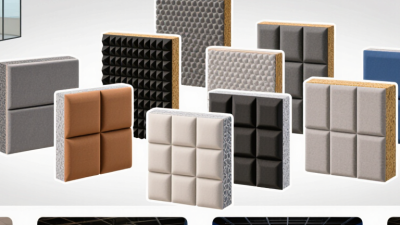
Panel Type Typical Acoustic Role Safety Considerations Durability and Maintenance Appearance Options Environmental Impact Best-Fit Applications
PET Felt Panels Broadband sound absorption; commonly used for reducing reflected speech and office noise. Generally favorable
Select products tested for low emissions, flame performance, and indoor-air-quality requirements.
Good
Lightweight, moisture-resistant, and easy to clean with a vacuum or soft brush.
Available in many colors, geometric shapes, baffles, screens, and printed or cut patterns. Often manufactured with recycled polyester content; recyclability depends on composition, adhesives, and local facilities. Open-plan offices, classrooms, meeting rooms, libraries, and hospitality interiors.
Mineral Wool Panels High sound absorption across a wide frequency range when properly sized and installed. Strong fire performance potential
Use a sealed, durable facing and follow handling instructions to limit fiber exposure during installation.
Very good
Rigid products retain their shape; protect exposed edges from impact and moisture.
Usually covered with fabric; broad color and texture selection is available. Mineral-based and durable, but manufacturing is energy-intensive. Recycling pathways vary by region. Auditoriums, studios, restaurants, offices, and spaces requiring strong acoustic performance.
Fiberglass Panels Efficient broadband absorption, especially for mid- and high-frequency reflections. Good when enclosed
Choose panels with a fully sealed surface or facing and verified fire and emissions data.
Very good
Rigid construction resists sagging; fabric can be replaced if the frame is serviceable.
Fabric-wrapped panels support custom colors, sizes, edge details, and artwork. Some products contain recycled glass; production requires significant energy, and end-of-life separation can be difficult. Recording rooms, conference rooms, cinemas, music rooms, and commercial interiors.
Perforated Wood Panels Absorption is improved when perforated wood is combined with an absorptive backing and an air cavity. Depends on finish
Check flame-spread, smoke-development, formaldehyde-emission, and coating information.
Good
Durable in stable indoor conditions; avoid excessive humidity and direct water exposure.
Natural wood grain, stains, veneers, perforation patterns, and linear slat designs. Renewable or recycled wood options are available; environmental performance depends on sourcing, resins, finish, and product lifespan. Libraries, cultural venues, executive areas, restaurants, and architectural feature walls.
Acoustic Foam Panels Effective mainly for controlling high- and mid-frequency reflections; limited low-frequency absorption unless thick or specially designed. Requires careful specification
Verify fire classification, smoke behavior, and emissions data before use in occupied buildings.
Moderate
Can discolor, crumble, or deform with ultraviolet exposure, heat, solvents, or physical impact.
Lightweight wedge, pyramid, or contoured surfaces; usually offered in a limited color range. Usually petroleum-derived polymer; recycling is limited in many areas, although long service life can reduce replacement demand. Small studios, broadcast rooms, equipment rooms, and controlled-use spaces where appearance and fire requirements are satisfied.
Wood-Wool Panels Porous mineralized wood fibers provide sound absorption while retaining a textured surface. Check treatment and certification
Confirm fire classification, binder composition, and indoor-air-quality documentation.
Good
Resistant to ordinary indoor wear; edges should be protected from repeated impact and water.
Distinctive fibrous texture; can be painted in multiple colors and used as a visible finish. Uses wood fibers and mineral binder; renewable content may be significant, but manufacturing and transport still affect the footprint. Schools, sports facilities, workshops, offices, and industrial-style interiors.

Selection note: Product performance varies with thickness, density, mounting method, air gap, facing, and room conditions. Before purchase, request current test documentation for sound absorption, fire behavior, volatile organic compound emissions, recycled content, and installation requirements.

Set a Budget and Verify Installation and Maintenance Requirements

How to Choose Acoustic Sound Panels in 2026?

In 2026, choosing acoustic panels starts with a realistic budget, not a glossy product image. Measure the room, note hard surfaces, and identify the loudest problem. A meeting room may need speech clarity, while a music corner may need controlled reflections. Set aside money for hardware, professional advice, and unexpected wall repairs. Cheap panels can become expensive when they require special tools or repeated adjustments.

Installation details deserve equal attention. Ask how much wall area the installer will cover and whether an air gap is necessary. Request written installation instructions and documented performance data. Do not assume thicker always means better. Placement, density, and room geometry often affect results more than appearance. An installer should check wall strength, access routes, and future removal needs. During a recent office test, we moved two panels away from a corner. Speech became clearer, but the improvement was less dramatic than expected. Rooms behave differently. That uncertainty deserves a contingency budget. Also verify cleaning methods, fabric durability, humidity limits, and replacement access before purchasing.

Tips: Compare total cost, not panel price alone. Keep 10–15 percent for adjustments. Confirm maintenance duties in writing. Photograph wall conditions before installation. Recheck the room after installation.