
+1 877-337-9312 | sale@sflbuild.com

Blog

What Is the Best China WPC Decking Material?

What Is the Best China Wpc Decking Material? The answer depends on climate, structure, maintenance expectations, and verified product performance. A reliable Wpc Decking Material should balance recycled wood fiber, polymer quality, surface protection, and dimensional stability. It should not be selected by appearance alone. Looks can mislead.

In practical projects, installers examine board density, moisture resistance, fastener holding strength, and thermal movement. A deck exposed to intense sunlight may expand noticeably between summer and winter. Poorly planned gaps can cause raised edges, noisy joints, or visible distortion. Details decide. Experienced suppliers should provide technical data, installation instructions, sample sections, and consistent batch information. Independent testing can also clarify slip resistance, water absorption, bending performance, and resistance to mold or fading.

China offers many WPC decking manufacturers, but quality varies widely between factories and product lines. A lower price may reflect thinner boards, weaker cores, limited testing, or unstable pigments. A higher price is not automatically safer. That assumption needs questioning. Buyers should compare complete systems, including clips, joists, edge profiles, warranties, and replacement support. Factory audits, production records, and export experience can reveal more than polished brochures.

The best choice is therefore a documented and application-matched Wpc Decking Material. Coastal balconies, garden paths, pool surrounds, and commercial terraces require different priorities. A small sample should be tested under local conditions when possible. Touch the surface after direct sun. Check drainage after rain. Inspect the hidden fixing system. These simple observations often expose weaknesses early. Careful selection reduces maintenance risks and supports a durable, attractive outdoor space.
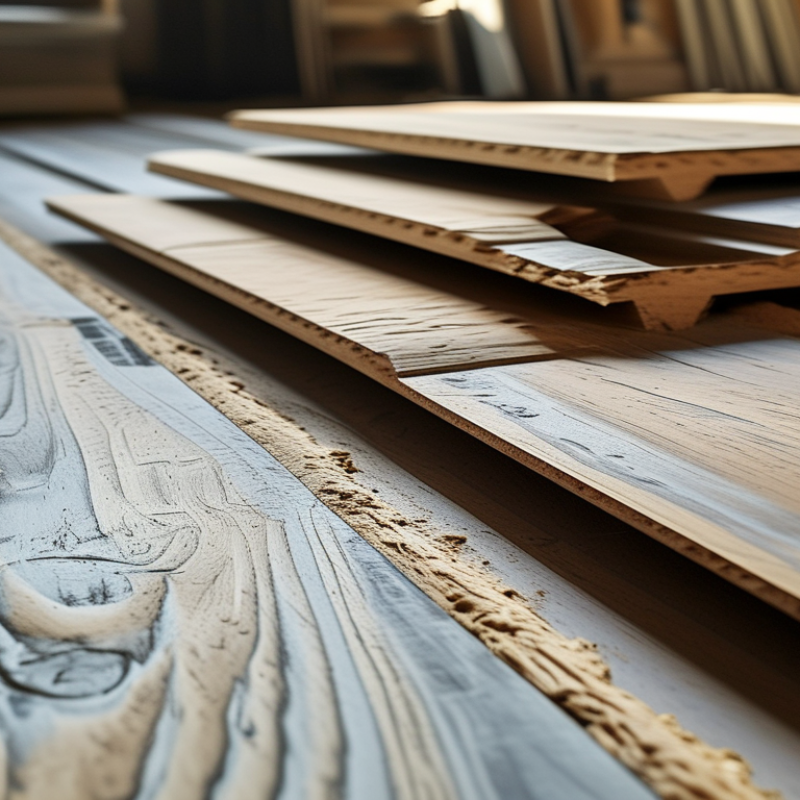
What Is the Best China WPC Decking Material?

WPC Decking Defined: Wood–Polymer Composition and China’s Main Material Types

What Is the Best China WPC Decking Material?

WPC decking combines wood fiber with a thermoplastic polymer and performance additives. Wood fiber provides texture, stiffness, and a familiar warm appearance. The polymer binds those fibers and improves moisture resistance. Additives can support color stability, UV resistance, fire performance, and processing quality. This balance matters. During practical quality checks, I examine fiber distribution, surface consistency, and edge density. Small mistakes show quickly.

China’s main WPC material types usually include PE-WPC, PVC-WPC, and PP-WPC. PE-WPC is widely used for outdoor decking because it offers good moisture resistance and impact flexibility. PVC-WPC generally feels lighter and resists water well, but it can become brittle under poor formulation or cold conditions.

PP-WPC provides useful stiffness and heat resistance, although its processing demands careful control. Some products use wood flour, while others use bamboo fiber or mixed plant fibers. Recycled polymer can reduce resource use, but its quality may vary between batches.

A capped WPC board adds a protective polymer layer around the core. It may improve stain resistance and reduce water absorption, but the cap must bond firmly. I would not select material by appearance alone. Ask for water absorption, bending, slip, UV, and dimensional-change test data. Check the installation climate too. Dark boards may expand noticeably in strong sunlight. Even experienced buyers sometimes overlook ventilation beneath the deck. That detail can weaken an otherwise well-made board.

Material Comparison: HDPE, PVC, and PP WPC Decking by Density and Durability

Choosing the best China WPC decking material starts with density, not appearance alone. Wood flour, mineral fillers, pigments, and foaming agents can change the final figure. Ask for tested board data, not only a polymer label.

Density matters. HDPE WPC usually sits near 0.94–0.97 g/cm³ before fillers. It offers strong impact resistance and low water absorption, making it practical for wet gardens and pool edges. However, HDPE can expand noticeably under direct summer sun.

PVC WPC is heavier, often around 1.30–1.45 g/cm³. Its rigidity supports stable walking surfaces, and it resists moisture well. Poor formulations may become brittle in cold weather or fade under weak UV protection.

PP WPC is lighter, commonly near 0.90–0.91 g/cm³. It can provide good chemical resistance and a warmer surface feel. Its lower density may reduce stiffness unless the profile design compensates.

A useful comparison checks flexural strength, impact performance, water absorption, UV aging, and thermal expansion. On a long balcony, joist spacing can matter as much as resin selection.

A dense board is not automatically more durable. That assumption deserves review.

Look for independent test reports, installation tolerances, and consistent batch data. Examine the board edge, too. A dense skin over a weak core can mislead buyers during a quick inspection.

Surface texture also affects traction after rain. Real performance depends on formulation, profile structure, drainage, fastening, and local climate.

Performance Testing: ASTM D7031, ASTM D6109, and EN 15534 Requirements

What Is the Best China WPC Decking Material?

The best China WPC decking material is not chosen by color or wood texture alone. ASTM D7031 provides a framework for evaluating composite decking performance. ASTM D6109 measures flexural properties, including stiffness and bending strength. These tests help reveal how a board behaves under foot traffic, furniture loads, and temperature changes.

A reliable supplier should provide test reports with specimen dimensions, span, loading speed, conditioning, and failure results. Numbers without test conditions are incomplete. EN 15534 adds European requirements for composition, durability, moisture behavior, and dimensional stability. Its product-specific requirements should match the intended decking application. Pay attention to swelling after water exposure. Small movement can become visible at board joints.

Field experience also matters. A board may pass a laboratory test but perform poorly after repeated wetting, intense sunlight, or poor substructure spacing. That gap deserves attention. Grand View Research estimated the global wood-plastic composites market at approximately US$7.1 billion in 2023, showing strong demand but not guaranteeing quality. ASTM D7031 itself is a guide, not a universal pass-or-fail certificate. Therefore, I would compare independent reports, production samples, and installation records before selecting material. The honest weakness is that some reports test fresh boards only. Long-term creep and color change may remain uncertain.

What Is the Best China WPC Decking Material? - Performance Testing: ASTM D7031, ASTM D6109, and EN 15534 Requirements

Evaluation Dimension ASTM D7031 ASTM D6109 EN 15534 What to Request from a Supplier
Primary purpose Guide for evaluating and specifying wood–plastic composite products and materials. Test method for determining flexural properties of plastic lumber and related products. European product and material requirements for wood–plastic composites; Part 1 covers general characteristics and Part 4 covers decking profiles. The exact standard edition, product type, test laboratory, specimen preparation procedure, and complete test report.
Flexural performance Identifies flexural strength and stiffness as important performance characteristics for structural or load-bearing applications. Uses bending tests to determine flexural modulus of elasticity and flexural strength or modulus of rupture. Requires relevant mechanical performance to be assessed according to the applicable product category and test procedures. Flexural modulus in MPa, flexural strength or MOR in MPa, load–deflection curves, span, cross-section, loading rate, and failure mode.
Test configuration Recommends selecting test methods that reflect the intended end use, including outdoor exposure and decking-related performance. Typically uses a three-point bending arrangement with a defined support span, specimen geometry, and loading rate. The applicable part and product specification determine the required test arrangement and evaluation criteria. Test span-to-depth ratio, specimen dimensions, support and loading nose details, loading direction, and number of specimens.
Water absorption and thickness change Treats moisture-related dimensional stability and water absorption as key characteristics for exterior WPC products. Primarily addresses flexural testing; water absorption and dimensional change normally require separate applicable methods. Includes moisture-related characteristics and dimensional changes relevant to WPC products and decking profiles. Water absorption percentage, thickness swelling percentage, test duration, immersion conditions, and measurement locations.
Dimensional stability Considers changes caused by moisture and temperature because they can affect installation, gaps, and service performance. Dimensional stability is not the principal property measured by this flexural test method. Addresses dimensional variation and product tolerances for the applicable WPC product category. Length, width, and thickness changes after conditioning; coefficient of thermal expansion where relevant; profile tolerances in millimetres.
Weathering and colour stability Provides a framework for considering weatherability, colour change, surface appearance, and durability during product evaluation. Does not determine outdoor weathering or colour retention. Relevant appearance and durability characteristics are evaluated using the applicable European procedures and product requirements. Accelerated-weathering method, exposure time, irradiance or UV conditions, colour-change measurement, surface defects, and post-exposure strength results.
Slip resistance Identifies surface safety and slip resistance as important considerations for decking applications. Not measured by the flexural test method. Decking profiles are evaluated for applicable surface characteristics, including slip-related performance where required. Slip-resistance test method, dry and wet results, test direction, surface condition, and any stated classification or limit.
Fastener and installation compatibility Encourages evaluation of product characteristics that affect installation, fastening, serviceability, and end-use performance. Does not by itself qualify screws, clips, joist spacing, or installation systems. Product installation and profile requirements must be considered together with the applicable decking specification and instructions. Approved fastener type, pull-out or holding data where relevant, recommended joist spacing, edge distances, expansion gaps, and installation drawings.
Fire performance Fire behaviour may need separate evaluation when required by the building application or local code. Not a fire-classification test method. Fire-related classification and testing are handled under the applicable European fire standards and regulatory requirements. Reaction-to-fire test standard, classification, specimen construction, substrate, mounting method, and report scope.
Quality-control indicators Supports a systematic specification and testing program rather than relying on a single property. Provides repeatable flexural data when specimen preparation, conditioning, and machine settings are controlled. Supports conformity assessment using defined product characteristics, test methods, and documented production control. Mean, minimum, maximum, and coefficient of variation; batch identification; conditioning records; calibration certificates; and traceable sample records.
How to interpret compliance A guide does not automatically create a universal pass/fail value for every WPC decking product. A test result is meaningful only when the specimen, conditioning, loading method, and acceptance criteria are clearly defined. Compliance depends on the applicable part, product category, declared use, and stated European requirements. Do not compare isolated numbers; compare complete, third-party test reports against the requirements for the intended climate and installation.

Note: ASTM D7031 is a guidance document, ASTM D6109 is a flexural test method, and EN 15534 contains product-specific requirements. Exact acceptance criteria depend on the applicable product category, standard edition, intended use, and local building regulations.

Moisture, UV, and Slip Resistance: ASTM D570 and EN 15534 Evaluation Data

What Is the Best China WPC Decking Material?

The best WPC decking material should resist water, sunlight, and daily foot traffic. ASTM D570 measures water absorption after controlled immersion. Low absorption usually indicates a denser, better-sealed composite. However, the result depends on specimen preparation, exposure time, and edge sealing. A useful report should show the original weight, final weight, and absorption percentage.

EN 15534 evaluation adds practical performance information for decking profiles. It considers dimensional changes, swelling, and resistance to environmental conditions. For slip resistance, the tested surface should be identified clearly. Grooved and brushed surfaces can behave differently when wet. A reliable report should state the test method, wet condition, direction of movement, and measured friction result. Dry-floor data alone is not enough.

Real installation details still matter. Water should drain between boards, not remain in dark joints. UV evaluation should include color change and surface cracking after exposure. A board may retain its strength but fade noticeably. That matters beside a pool or sunlit terrace. Laboratory results cannot fully reproduce sand, algae, grease, or winter frost. This is the weak point. I would compare several production batches, inspect cut edges, and request traceable test dates. Choosing the lowest absorption value alone can be misleading. A balanced decision considers moisture uptake, UV stability, wet slip performance, profile design, and installation quality.

How to Select the Best China WPC Decking: Grade, Profile, Warranty, and Cost

What Is the Best China WPC Decking Material?

Selecting the best China WPC decking starts with grade, not appearance. A high-grade board usually combines stable wood fibers, recycled polymer, UV additives, and controlled extrusion. Check density, water absorption, flexural strength, and slip resistance in independent test reports. ASTM D7031 provides guidance for evaluating wood-plastic composite products, but it is not a product certification. Ask for test dates and laboratory names.

Profile affects comfort and long-term cost. A solid board handles heavy furniture better, while a hollow profile weighs less and reduces shipping expense. However, weak internal webs can crack around screws. I would inspect a cut sample, especially near the end caps.

Grand View Research valued the global WPC market at about USD 7.31 billion in 2023, with projected annual growth above 11% through 2030. Fast growth helps supply, but it also creates inconsistent quality.

Warranty language deserves careful reading. Look for separate structural, color-fade, stain, and termite clauses. A ten-year warranty may exclude poor ventilation, incorrect joist spacing, or coastal exposure. Confirm installation requirements in writing. Cost should include boards, clips, substructure, labor, delivery, and roughly 5–10% cutting waste. Freedonia’s industry analysis identifies decking as a major WPC application, yet product prices still vary sharply by polymer content and profile. My practical view is imperfect: the cheapest board can become expensive after replacing warped sections, but the most expensive board is not automatically the most reliable.