How to Optimize Intelligent Warehousing Systems for Efficiency?
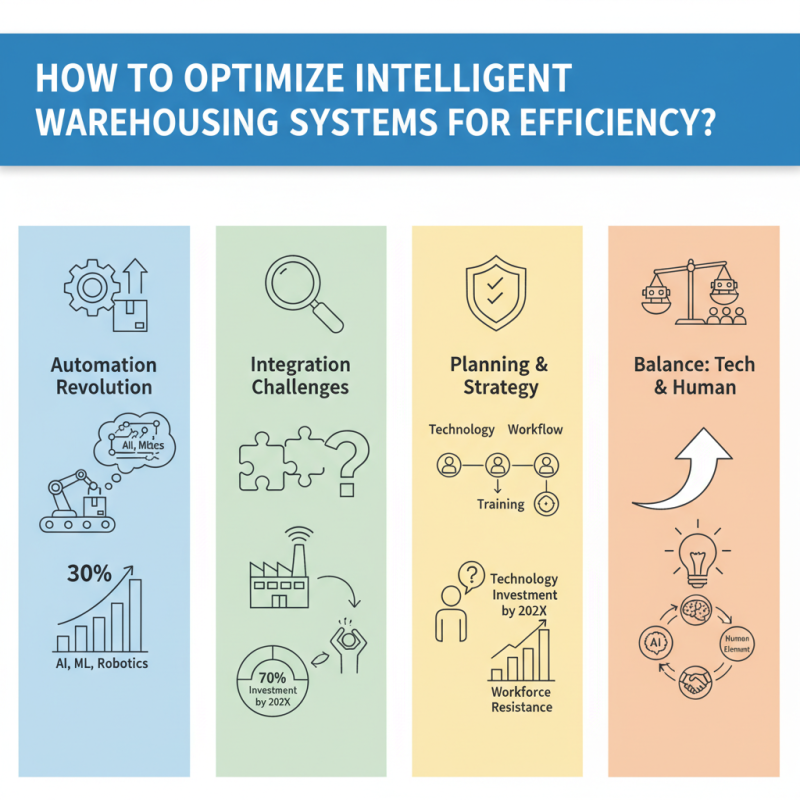
Intelligent Warehousing Systems are revolutionizing logistics and supply chain management. According to a report by McKinsey, companies leveraging automation in warehousing can improve efficiency by up to 30%. These systems utilize advanced technologies like artificial intelligence, machine learning, and robotics. However, many organizations still struggle with integration challenges.
The efficiency gains from Intelligent Warehousing Systems can be significant. The Gartner Group projects that 70% of warehouses will invest in automation technologies within the next few years. Yet, implementation can be complex. Factors such as inadequate training and integration with existing systems can hinder progress. Reflecting on these challenges is crucial for any organization.
Implementing Intelligent Warehousing Systems demands careful planning and strategy. It's not merely about technology; it encompasses workflow management and employee training as well. A recent survey indicated that 40% of companies encounter workforce resistance during changes. Thus, organizations must address these human factors to fully capitalize on the benefits of automation. Balancing technology and human elements is vital for achieving optimal efficiency in warehousing.
Understanding Intelligent Warehousing Systems and Their Components
Intelligent warehousing systems play a crucial role in modern supply chains. They integrate advanced technologies like automation and artificial intelligence. Understanding their components helps enhance efficiency and accuracy. A typical system includes sensors, data analytics, and robotic systems. These elements enable real-time monitoring and decision-making, which can improve operational flow.
Sensors collect data on inventory levels and warehouse conditions. They provide insights that help forecast demand. Data analytics processes this information, identifying trends and potential issues. Robotic systems assist in material handling. They reduce human error and increase speed. Yet, while these components are powerful, they also require continuous evaluation. Regular assessments identify weaknesses and areas for improvement.
Implementing intelligent systems is not without challenges. Technology is ever-evolving, and operators must adapt. Training staff to work with these systems can be a hurdle. It’s essential to balance technology implementation with workforce skill enhancement. As advancements progress, flexibility and adaptability in warehousing operations become crucial for sustained success.
Key Performance Indicators for Measuring Warehouse Efficiency
To optimize intelligent warehousing systems, it’s crucial to focus on key performance indicators (KPIs) that measure efficiency. One vital KPI is order fulfillment accuracy, which indicates how effectively warehouses meet customer demands. Reports from the Warehousing Education and Research Council (WERC) suggest that high-performing warehouses achieve fulfillment rates above 99%. This precision can significantly impact customer satisfaction and retention.
Another important metric is inventory turnover. This KPI helps gauge how quickly inventory is sold and replaced over a specific period. A higher turnover rate typically reflects better efficiency. According to the Supply Chain Management Review, top-performing facilities have turnover rates of 8 to 12. Lower turnover may suggest overstocking or inefficient handling processes, signaling a need for review.
Tip: Regularly analyze your warehouse layout and product placement. Optimizing these can massively improve pick accuracy and reduce travel time.
Technology integration is also pivotal. Utilizing automation and data analytics can enhance real-time tracking and decision-making. Systems equipped with AI can predict stock requirements, thereby reducing excess inventory levels. However, too much dependence on technology without employee training may lead to mistakes.
Tip: Invest in training your workforce for new technologies. Their expertise is invaluable in ensuring smooth operations.
Implementing Automation Solutions in Warehousing Operations
As warehousing operations evolve, implementing automation solutions becomes a crucial focal point. Automated technologies, such as robotic arms and conveyor systems, streamline tasks like sorting and packing. They boost efficiency and reduce errors, which is essential in a fast-paced environment. However, reliance on these systems poses risks. For instance, a malfunctioning robot can halt operations entirely, leading to delays.
Integration of algorithms also facilitates inventory management. Real-time data analytics helps in tracking stock levels, preventing overstocking or stockouts. Still, data security remains a concern. Vulnerabilities can lead to unauthorized access, jeopardizing sensitive information. Hence, organizations must regularly audit their security measures.
Training staff to work alongside these systems is vital. While automation takes over menial tasks, human oversight ensures quality control. Workers should feel empowered to identify and fix system flaws. Encouraging open communication fosters a culture of continuous improvement. Reflecting on the balance of automation and human input can lead to the optimization of warehousing efficiency. Balancing these elements is a careful dance, one that requires ongoing evaluation and adjustment.
Data Analytics for Enhancing Decision-Making in Warehousing
Data analytics plays a crucial role in enhancing decision-making in warehousing. By leveraging large datasets, warehouses can identify operational inefficiencies. For instance, tracking inventory levels in real-time allows for better stock management. Analyzing order patterns helps predict peak times and customer demands. This proactive approach significantly reduces costs associated with overstocking and stockouts.
Utilizing data analytics can also improve workforce management. Analyzing employee performance data reveals areas for improvement. Tracking key performance indicators (KPIs) can motivate staff and optimize their workflow. However, implementing data-driven strategies often requires cultural shifts within organizations. Employees must adapt to new technologies, which can be daunting. Resistance to change is a common hurdle that requires thoughtful leadership and training.
Moreover, while data analytics provides valuable insights, reliance on data alone can be problematic. Overthinking metrics may lead to decision paralysis. It’s essential to strike a balance between data-driven decisions and human intuition. Continuous evaluation of data practices is necessary. After all, the goal is to create an efficient, responsive warehousing system that caters to dynamic market demands.
How to Optimize Intelligent Warehousing Systems for Efficiency?
| Dimension | Metric | Value | Improvement Strategies |
| Inventory Turnover | Days | 30 | Implement real-time inventory tracking |
| Order Fulfillment Rate | Percentage | 95% | Enhance automated picking systems |
| Warehouse Space Utilization | Percentage | 80% | Optimize storage layout |
| Labor Productivity | Orders per hour | 50 | Training and performance incentives |
| Delivery Accuracy | Percentage | 98% | Adopt advanced data analytics |
Best Practices for Continuous Improvement in Warehousing Efficiency
In optimizing intelligent warehousing systems, continuous improvement plays a crucial role. One effective practice involves regular training for staff. Knowledgeable employees make better decisions. They can swiftly adapt to new technologies. This not only enhances efficiency but also fosters a culture of innovation. Regular workshops and hands-on training can minimize errors.
Another best practice is leveraging data analytics for decision-making. Analyzing warehouse operations can reveal inefficiencies. Small tweaks, like rearranging products based on demand patterns, can yield significant benefits. Real-time tracking of inventory also leads to reduced handling times. Avoid relying solely on outdated models; they may mislead strategies and lead to wasted resources.
Embracing a feedback loop is necessary for sustained improvement. Encourage employees to share their insights. Sometimes, frontline workers notice issues that management overlooks. Implementing these suggestions can yield tangible enhancements. Constantly assess and refine processes. It is essential to remember that even small changes can contribute to overall efficiency.