+1 877-337-9312 | sale@sflbuild.com

Blog

What Are the 2026 Best Acoustic Windows?

Choosing the best acoustic windows in 2026 requires more than comparing product names or impressive marketing claims. A quiet room depends on glass thickness, laminated interlayers, frame design, airtight seals, and correct installation. Even premium windows can perform poorly when small gaps surround the frame.

This guide examines acoustic windows through practical performance measures, including laboratory sound ratings, traffic-noise reduction, and real-world installation quality. We will consider products suited to bedrooms, home offices, apartments, and properties near busy roads. A window facing buses at 7 a.m. may need different protection than one overlooking a quiet garden. Small details matter.

Look for independently tested acoustic ratings, such as STC or Rw values, while remembering that laboratory results may not reflect every building. Ask manufacturers for complete test reports. Ask installers how they treat reveals, joints, vents, and surrounding masonry. Those answers often reveal more than a sales brochure.

There is no universal winner.

The best choice depends on the noise source, wall construction, budget, ventilation needs, and local climate. This review compares leading configurations rather than declaring one product perfect. Some recommendations may change as manufacturers improve their designs or publish stronger evidence. That uncertainty deserves attention. A reliable decision combines technical data, experienced installation advice, and an honest inspection of your room’s weaknesses.
What Are the 2026 Best Acoustic Windows?

Define Acoustic Performance: STC 45+ and OITC 35+ Industry Benchmarks

What Are the 2026 Best Acoustic Windows?

Define Acoustic Performance: STC 45+ and OITC 35+ Industry Benchmarks

In acoustic window testing, STC 45+ is a strong benchmark for speech and indoor noise. It measures sound transmission across common mid-range frequencies. This matters near offices, schools, and busy apartment corridors. However, STC does not fully represent outdoor traffic noise.

OITC 35+ offers a more practical benchmark for exterior conditions. It gives greater weight to lower frequencies from trucks, buses, aircraft, and construction equipment. A window may achieve a high STC rating yet perform less effectively against deep road noise. This distinction is often overlooked.

Glass thickness, laminated layers, air gaps, frame design, and compression seals all influence results. Installation is equally important. A small perimeter gap can weaken an otherwise excellent assembly. In real projects, the wall, window, and surrounding structure must work together. Laboratory ratings are useful, but field conditions can be less forgiving.

Look for independently tested assemblies, not isolated glass claims. Request the complete tested configuration and installation method. Acoustic specialists should also review room size, façade exposure, ventilation needs, and expected noise levels. A higher rating is not automatically better for every room. Budget limits, daylight, heat gain, and operability still matter.

The numbers help. They do not tell the whole story.

Compare Window Glass: Laminated, Double, and Triple-Glazed Acoustic Designs

What Are the 2026 Best Acoustic Windows?

For 2026, the best acoustic design depends on the noise source, not glass thickness alone. The World Health Organization recommends keeping road-traffic noise below 53 dB Lden and 45 dB at night. Window performance must therefore be measured, not guessed. ASTM E413 classifies airborne sound insulation through Sound Transmission Class, while OITC better reflects outdoor traffic noise.

Laminated glass usually performs well against voices, sirens, and high-frequency street noise. Its flexible acoustic interlayer can reduce vibration more effectively than standard monolithic glass. Double glazing may outperform triple glazing when it uses different pane thicknesses and a wide airspace. Triple glazing improves thermal insulation, but its extra pane does not automatically deliver quieter rooms. Poor seals can cancel expensive glass upgrades. I would not promise silence. Installation remains the weak point.

Tips: Ask for tested STC and OITC values under ASTM or ISO procedures. Compare the complete window unit, not the glass alone. Look for laminated glass on the exterior or interior pane, depending on the tested design. Check frame compression, perimeter seals, and wall connections. A 2023 review in Building and Environment also highlights flanking paths around windows and walls. Measure nighttime noise before ordering. Real buildings are imperfect, and laboratory results can feel optimistic.

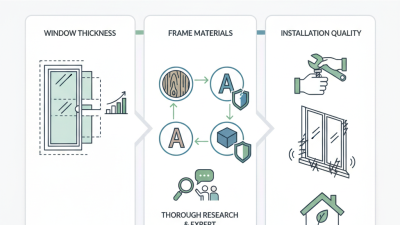
Evaluate Installation Quality Using ASTM E1332 OITC and ASTM E413 STC Ratings

Choosing the best acoustic windows in 2026 means reading the rating and inspecting the installation. ASTM E1332 OITC estimates how well a window reduces outdoor noise, including traffic and aircraft. ASTM E413 STC focuses mainly on speech and indoor sound frequencies. A higher number helps, but it does not guarantee a quiet room.

On site, gaps can defeat expensive glass. Check the frame perimeter, sill, and meeting rails for continuous seals. Expanding foam alone is not a complete acoustic solution. The installer should use compatible backer rod, sealant, shims, and insulation without distorting the frame. Open and close each sash. Listen near the corners. Small air leaks are often more noticeable than expected. I have seen a strong laboratory rating weakened by careless finishing. That remains an uncomfortable lesson.

Tips: Ask for laboratory test reports, not only sales claims. Confirm that OITC and STC values apply to the complete window assembly. Request field verification when street noise is severe. Photograph the rough opening before trim covers it. Ventilation, doors, and wall penetrations can bypass a well-sealed window. If the room still feels loud, review the installation before replacing the glass.

Rank 2026 Window Systems by Noise Reduction, Air Leakage, and Glass Thickness

What Are the 2026 Best Acoustic Windows?

For 2026, acoustic performance should be ranked by verified OITC, STC, air leakage, and glass thickness. ASTM E1332 defines OITC for outdoor traffic noise, while ASTM E413 supports STC classification. A standard 3 mm single pane often achieves only STC 26–28 in laboratory testing. That is weak near roads or rail lines.

Secondary glazing usually ranks highest for noise reduction. Research from the UK Department for Energy Security and Net Zero reports that well-sealed secondary systems can improve insulation by roughly 10–20 dB, depending on the cavity and installation. Laminated insulating glass follows, commonly reaching OITC values near 31–36 dB. Thicker and asymmetric panes perform better than equal panes. A 6 mm pane beside a 4 mm pane can reduce resonance more effectively. Triple glazing helps, but it is not automatically quieter. This is often misunderstood.

Air leakage changes the ranking. NFRC testing measures leakage in cubic feet per minute per square foot at 1.57 psf. High-quality operable units may test near 0.1–0.2 cfm/ft², while poorly adjusted windows can exceed 0.3. The NAFS standard, AAMA/WDMA/CSA 101/I.S.2/A440, evaluates resistance and operational performance, not noise alone. Installation remains the weak point. Even thick acoustic glass loses value when perimeter seals shrink, frames distort, or vents remain open. I would not rank any system from glass data alone.

What Are the 2026 Best Acoustic Windows?

Representative benchmark comparison of common window systems by outdoor-indoor transmission class, air leakage, and nominal total glass thickness.

Higher OITC values indicate better reduction of traffic and outdoor noise. Lower air-leakage values indicate a tighter window assembly. The values shown are representative performance benchmarks based on typical ranges reported under ASTM E90, ASTM E1332, and AAMA/WDMA/CSA window testing methods; actual results vary by frame, spacer, installation, and test configuration.

Match Acoustic Windows to Traffic Noise, Frequency Bands, and Room Location

What Are the 2026 Best Acoustic Windows?

The best acoustic window depends on the noise reaching your room. Traffic noise is not one sound. Engines create low frequencies, while tires and horns add mid and high frequencies. Low-frequency noise is harder to block. It can pass through glass, frames, walls, and small air gaps.

For a bedroom facing a busy road, choose a tested acoustic window with laminated glass, different glass thicknesses, and strong airtight seals. Unequal glass layers can reduce a wider range of frequencies. However, glass performance alone is not enough. A poorly fitted frame may leave a narrow gap that carries noticeable noise. I have seen this mistake during renovations. The expensive window performed poorly because the surrounding masonry remained weak.

Room location changes the decision. A street-facing bedroom needs stronger attenuation than a bathroom facing an internal courtyard. Corner rooms may receive noise from two directions. Upper floors are not always quieter, especially near elevated roads or reflective buildings. Ask for laboratory results and, when possible, request measurements in one-third octave bands. A single overall rating can hide weak low-frequency performance.

Tips: Record traffic noise during morning, evening, and wet weather. Note engines, tires, sirens, and vibration separately. Compare those observations with the window’s tested frequency data. Seal vents and frame joints carefully, but do not block required ventilation. No window solves every sound problem. Sometimes, the wall needs attention too.

What Are the 2026 Best Acoustic Windows? - Match Acoustic Windows to Traffic Noise, Frequency Bands, and Room Location
Traffic-Noise Situation Dominant Frequency Bands Recommended Acoustic Window Configuration Typical Glazing and Air Gap Indicative Laboratory Performance Best Room Location Key Installation Requirement
Quiet residential street
Outdoor level: approximately 45–60 dBA
Low: 63–125 Hz
Mid: 250–1,000 Hz
High: 2,000–4,000 Hz
High-quality double-glazed unit with different glass thicknesses and a well-sealed frame 6 mm glass / 16 mm argon cavity / 4 mm glass STC: approximately 34–38
OITC: approximately 28–33
Main benefit: reduces speech, tire, and general road noise
Living rooms, dining rooms, low-exposure bedrooms Continuous perimeter gaskets, sealed frame joints, and no unsealed trickle vents
Busy urban road
Outdoor level: approximately 60–70 dBA
Strong energy from 63–250 Hz due to engines and tires; mid-band noise from traffic flow Asymmetric double glazing using one laminated pane and one thicker pane 10.8 mm acoustic laminated glass / 16–20 mm cavity / 6 mm glass STC: approximately 38–43
OITC: approximately 32–37
Better control of mid- and high-frequency traffic noise than standard symmetrical glazing
Street-facing bedrooms, home offices, study rooms Use a rigid frame, fully sealed opening perimeter, and acoustically treated ventilation
Arterial road with frequent buses and trucks
Outdoor level: approximately 65–75 dBA
Low: 63–125 Hz from heavy vehicles
Mid: 250–500 Hz from engines and exhaust systems
Acoustic laminated double glazing with a large cavity and asymmetric pane thicknesses 12.8 mm laminated glass / 20 mm cavity / 8 mm glass STC: approximately 42–47
OITC: approximately 36–41
Improved low-frequency performance compared with ordinary double glazing
Front bedrooms, nurseries, media rooms, street-side offices Prioritize airtight installation; seal frame-to-wall joints with compatible backer rod and acoustic sealant
Heavy truck route or bus corridor
Outdoor level: approximately 70–80 dBA
Very strong low-frequency content at 63–125 Hz, with substantial energy through 500 Hz Triple glazing with at least one acoustic laminated pane and unequal glass thicknesses 10.8 mm laminated glass / 12–16 mm cavity / 6 mm glass / 16–20 mm cavity / 8 mm glass STC: approximately 44–49
OITC: approximately 38–44
Performance depends strongly on frame design and cavity geometry
Road-facing sleeping rooms, quiet workspaces, recording or editing rooms Avoid weak vents and roller-shutter boxes; use independent acoustic ventilation where required
Road junction, braking, acceleration, and intermittent horns Broad spectrum from 63–4,000 Hz; horns and tire noise add mid- and high-frequency peaks Laminated double or triple glazing with different pane thicknesses and a mechanically robust frame 10.8–12.8 mm laminated pane combined with 6–10 mm monolithic panes and 16–20 mm cavities STC: approximately 40–48
OITC: approximately 34–42
Laminated glass helps with airborne mid- and high-frequency noise
Corner rooms, rooms above intersections, living rooms with large glazing areas Minimize operable sections; fixed units generally provide fewer leakage paths than opening sashes
Very high noise exposure or sensitive occupant Low-frequency truck noise plus broad-spectrum traffic noise; indoor background noise targets are critical Secondary glazing installed inside the existing window, or a high-performance primary window combined with secondary glazing Existing window plus a separate laminated pane; aim for an air space of approximately 100–200 mm where room depth allows STC: approximately 45–55
OITC: approximately 38–48
Large air spaces can reduce coincidence between the two glazing systems
Bedrooms requiring low night-time noise, clinics, hotels, libraries, specialist work rooms The secondary frame must be airtight; treat reveals and ventilation separately to prevent flanking paths
Large window or curtain-wall opening facing traffic All traffic bands; large glass area increases the influence of the weakest acoustic element Multi-panel insulated glazing with acoustic laminated glass and the smallest practical number of operable panels Commonly 10.8–16.8 mm laminated glass with 16–20 mm cavities; exact build-up requires project testing Whole-window STC/OITC can be lower than the glass-only rating
Typical whole-window STC: approximately 38–48
Open-plan living areas, offices, apartments with floor-to-ceiling glazing Specify the tested whole-window assembly, not only the center-of-glass acoustic value
Technical notes: STC is a weighted rating mainly used for speech-related airborne sound, while OITC gives greater emphasis to lower-frequency outdoor noise such as road traffic and aircraft. The values shown are representative laboratory ranges for comparable window assemblies, not guaranteed field results. Actual performance varies with glass composition, frame type, sash operation, window size, installation quality, wall construction, ventilation openings, and flanking transmission. For a final specification, request a tested whole-window rating and compare the OITC result with the expected traffic spectrum.