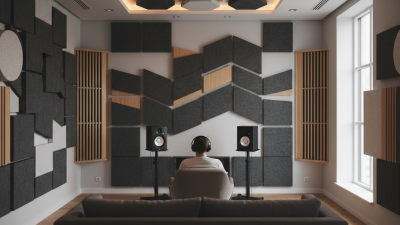
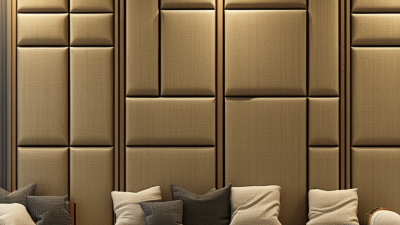
China Best Noise Panels for Global Buyers begins with a practical question: what problem must each panel solve?
The global acoustic panels market continues to expand. Grand View Research reports steady growth through 2030, driven by offices, schools, studios, and hospitality projects. However, market growth does not guarantee acoustic performance. The World Health Organization’s Environmental Noise Guidelines for the European Region connect excessive noise with sleep disturbance, annoyance, and cardiovascular risks. Its evidence estimates over one million healthy life years lost annually from environmental noise in Western Europe.
Sound expert Julian Treasure warned, “We are losing our listening,” during his TEDGlobal 2011 presentation. That short statement remains relevant. A visually attractive wall panel cannot correct every acoustic defect. Room volume, reverberation time, speech clarity, panel placement, and background noise all matter.
For global buyers, reliable evaluation starts with tested specifications. Look for absorption data based on ASTM C423 or ISO 354. Check the Noise Reduction Coefficient, but do not treat NRC as the complete answer. Fire classification, formaldehyde emissions, recycled content, edge quality, and installation hardware also deserve attention. A panel that performs well in a laboratory may fail after careless installation.
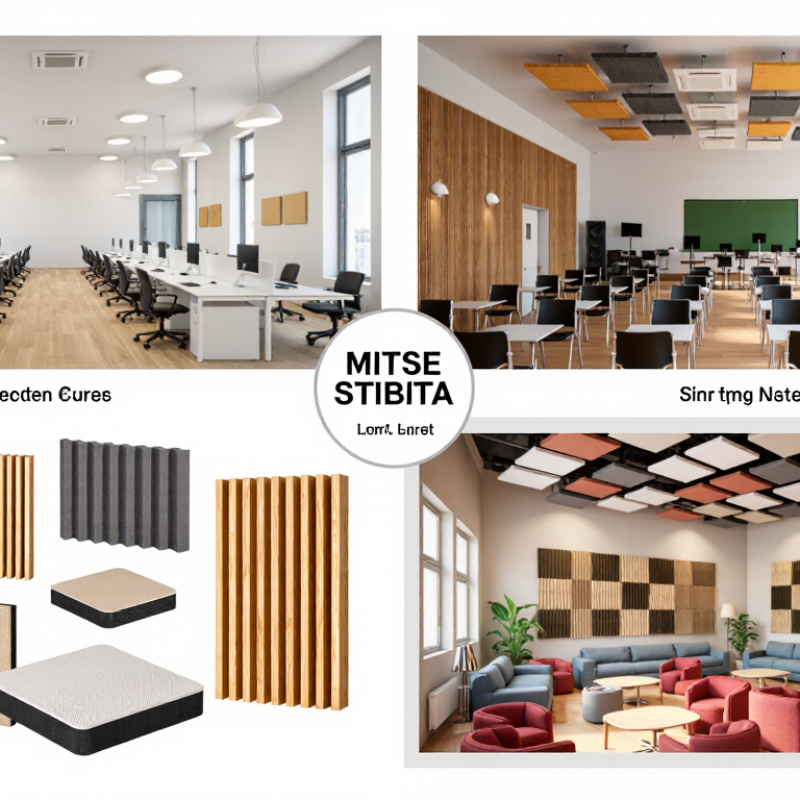
Chinese manufacturers offer broad choices, from PET-felt panels to wrapped fiberglass and wood-slat systems. Buyers should request independent test reports, batch details, color samples, and factory quality records. Confirm packaging before shipment. Damaged corners create costly delays.
The process is not perfect. Product names can sound more impressive than their evidence. This guide compares noise panels through measurable performance, practical experience, and supplier transparency, helping international buyers choose with fewer assumptions.
China Best Noise Panels for Global Buyers
Noise panels are materials designed to absorb sound energy inside a room. Most use porous fibers, foam, or perforated surfaces. They reduce reflections from walls and ceilings, rather than fully blocking sound through them. A hard room may create flutter echoes, like clapping inside an empty corridor. Proper panels soften those reflections and improve speech clarity.
Performance should be checked through recognized testing. ASTM C423 reports the Noise Reduction Coefficient, or NRC, on a scale commonly ranging from 0 to 1. Higher values usually indicate stronger absorption. ISO 354 measures absorption in a reverberation chamber, while ISO 11654 provides a weighted absorption rating. These numbers matter. They are not the whole story. The World Health Organization’s 2018 environmental noise guidance recommends less than 40 dB Lnight outside bedrooms, showing why indoor acoustic control deserves careful planning.
Room design changes results. A thick panel with an air gap often absorbs low frequencies better than a thin panel mounted tightly. In practical site checks, installers also find that covering one wall rarely solves every problem. Placement near first-reflection points can be more useful. However, test reports may look cleaner than real rooms. Furniture, windows, corners, and installation gaps alter performance. Global buyers should request laboratory data, fire classification, thickness, density, and mounting details. Some specifications remain unclear. That deserves scrutiny. Panels reduce unwanted sound, but they do not replace insulation, sealed doors, or mechanical-system control.
Typical sound absorption coefficients by octave-band center frequency. Higher values indicate that more acoustic energy is absorbed rather than reflected.
Mineral wool panels generally provide strong broadband absorption, especially in the mid and high frequencies. PET felt panels offer moderate absorption with lightweight construction, while perforated wood panels combine acoustic absorption with a decorative surface. Actual performance depends on panel thickness, air gap, mounting method, room conditions, and laboratory testing.
Chinese manufacturers produce several noise panel types for different acoustic problems. Porous panels use PET fiber, fiberglass, or mineral wool to absorb speech and machinery reflections. They often suit offices, classrooms, studios, and factory ceilings. Their performance depends on thickness, density, mounting distance, and edge sealing. A thin panel fixed directly to a wall may look neat but absorb less low-frequency sound.
Perforated timber and microperforated panels offer a harder, more architectural surface. They combine controlled absorption with stronger visual durability. Fabric-wrapped panels provide flexible colors and easy installation, while composite barrier panels target airborne noise from equipment enclosures. These products should not be confused with absorbers. Absorption reduces reflected sound inside a room; isolation limits sound transmission between spaces.
Testing matters for global buyers. ISO 354 measures sound absorption in a reverberation room, while ASTM C423 reports comparable absorption results. The World Health Organization’s 2018 noise guidelines recommend lower long-term exposure levels because excessive noise can affect sleep and health. The European Environment Agency reported that over 113 million people faced harmful road-traffic noise exposure in Europe in 2020. These figures show the scale of the problem, but they do not replace project-specific testing. Factory claims can also be incomplete. Request laboratory reports, installation details, fire classifications, and measured frequency data before comparing quotations.
Supplier evaluation should begin with measured performance, not attractive product photos. The European Environment Agency reported that over 113 million people faced harmful road-traffic noise above 55 dB Lden in 2020. This strengthens demand for dependable acoustic materials.
Ask suppliers for independent laboratory reports using ISO 354 or ASTM C423. These methods measure sound absorption inside controlled reverberation rooms. Check the Noise Reduction Coefficient, frequency bands, sample thickness, and mounting method. A panel claiming NRC 0.95 may perform differently after installation. Test conditions matter.
Look closely at the construction details. Request density records, facing specifications, edge treatment, fire-test documents, and production tolerances. The report should identify the tested model, not a similar sample. Factory visits can reveal uneven cutting, loose fabric, dusty storage, or inconsistent packaging. Small defects become obvious on a large wall.
Production capacity also needs evidence. Compare monthly output with recent order records and lead times. Ask how rejected panels are handled. A low price is not automatically efficient. Sometimes it signals thinner cores or weaker inspection. I would request a pre-shipment sample, then compare it with the approved sample after mass production. That step is easy to skip. It should not be. ISO 9001 certification can support process control, but it does not replace acoustic testing or careful buyer verification.
China Best Noise Panels for Global Buyers
Materials, Performance Standards, and Customization Options
Selecting acoustic panels requires more than comparing prices. The best material depends on room use, reverberation, fire requirements, and installation conditions. PET felt panels are lightweight, recyclable, and suitable for offices or classrooms. Mineral wool provides strong sound absorption, especially in meeting rooms and studios. Perforated wood panels add a warmer appearance while supporting controlled absorption. Not every panel blocks outside noise. Most panels absorb reflected sound inside a room.
For global buyers, request tested performance data instead of relying on broad claims. NRC results commonly describe absorption across selected frequencies, while ISO 354 or ASTM C423 testing offers a clearer laboratory reference. Fire classification may follow EN 13501-1 or ASTM E84, depending on the destination market. Check the complete test report, including thickness, mounting method, and test date. Details matter. A higher NRC alone can mislead when low-frequency control is important.
Customization can include panel length, thickness, edge shape, fabric color, printed patterns, and ceiling suspension systems. Some projects need CNC-cut clouds, wall rafts, or panels fitted around lighting. Ask for samples before approving full production. Color matching can vary between fabric batches, and printed surfaces may look different under warm lighting. One practical mistake is ignoring access for maintenance. A beautiful panel becomes inconvenient when it covers wiring or ventilation points. Clear drawings, packaging checks, and a small trial order reduce avoidable problems.
| Panel Material | Typical Thickness | Acoustic Performance | Applicable Test Methods and Standards | Moisture and Durability Characteristics | Common Applications | Customization Options | Important Buyer Considerations |
|---|---|---|---|---|---|---|---|
|
PET Felt Fiber Recycled or virgin polyester fiber formed into rigid acoustic panels |
9–24 mm |
Typical sound absorption coefficient:
αw approximately 0.25–0.80, depending on thickness and air gap. Commonly used as a mid- to high-frequency absorber. |
ISO 354 ISO 11654 ASTM C423 ASTM E84 | Lightweight, resistant to corrosion, and generally tolerant of normal indoor humidity. It should not be treated as waterproof unless specifically engineered and tested for that purpose. | Offices, classrooms, meeting rooms, restaurants, open-plan workspaces, wall features, ceiling baffles, and acoustic screens. | More than 40 standard color directions may be available; CNC-cut patterns, logos, geometric shapes, printed surfaces, edge profiles, hanging kits, and custom dimensions. | Confirm recycled-content percentage, color consistency between production lots, cleanability, edge quality, and the required flame-spread classification. |
|
Fabric-Wrapped Mineral Wool Mineral wool core enclosed by acoustically transparent fabric |
25–100 mm |
Typical sound absorption coefficient:
αw approximately 0.70–1.00 when properly mounted. Effective over a broad frequency range, especially when an air gap is included. |
ISO 354 ISO 11654 ASTM C423 EN 13501-1 | Dimensionally stable indoors and naturally non-combustible in many mineral wool constructions. The complete assembly classification depends on the core, fabric, frame, adhesive, and backing. | Recording rooms, conference rooms, auditoriums, cinemas, lecture halls, studios, and high-performance wall or ceiling treatments. | Custom panel sizes, thicknesses, fabric colors, bevels, edge details, concealed frames, direct-fix brackets, cloud suspension systems, and artwork printing. | Request the complete-system fire report, impact resistance information, formaldehyde or VOC documentation, and installation details for the selected mounting gap. |
|
Fiberglass Acoustic Board Semi-rigid glass fiber board with fabric or perforated facing |
25–100 mm |
Typical sound absorption coefficient:
αw approximately 0.65–1.00 with suitable thickness and mounting. Strong performance in speech-frequency bands. |
ISO 354 ISO 11654 ASTM C423 ASTM E84 | Low water absorption when protected by an appropriate facing; prolonged exposure to liquid water or high humidity can affect facings and supporting components. | Commercial interiors, cinemas, broadcast spaces, call centers, educational buildings, healthcare areas, and ceiling clouds. | Custom dimensions, wrapped corners, printed fabrics, perforated coverings, suspension hardware, magnetic fixing, concealed fixing, and integrated lighting cut-outs. | Verify fiber containment, facing tear resistance, cleanability, indoor-air-emission data, and the acoustic result for the exact facing material. |
|
Perforated Wood Panel Veneered or painted wood surface backed by an absorptive layer |
12–25 mm surface panel, typically with 30–100 mm backing system |
Typical sound absorption coefficient:
αw approximately 0.35–0.85, depending on perforation ratio, cavity depth, and backing material. Can provide selective low- and mid-frequency absorption. |
ISO 354 ISO 11654 ASTM C423 EN 13501-1 | Sensitive to prolonged moisture exposure and dimensional changes. Interior-grade panels require controlled humidity and appropriate sealing. | Auditoriums, hospitality interiors, cultural buildings, boardrooms, premium offices, music spaces, and feature ceilings. | Veneer species, laminate or paint finish, perforation diameter, slot pattern, open area, panel module, edge profile, fire-retardant treatment, and matching trims. | Check formaldehyde-emission class, substrate stability, veneer matching, fire treatment validity, and whether the acoustic test represents the final perforation and backing construction. |
|
Slotted Wood Panel Linear slots in a wood-based panel with acoustic fleece and absorptive backing |
12–25 mm surface panel, typically with 30–100 mm backing system |
Typical sound absorption coefficient:
αw approximately 0.35–0.80. Performance varies significantly with slot width, spacing, backing fleece, and cavity depth. |
ISO 354 ISO 11654 ASTM C423 EN 13501-1 | Suitable mainly for dry interior environments. Sealed finishes and stable substrates improve resistance to normal indoor humidity changes. | Offices, restaurants, corridors, libraries, transport interiors, lecture spaces, and decorative wall or ceiling systems. | Slot width, center spacing, module length, veneer or laminate finish, black or colored acoustic fleece, curved modules, integrated services, and concealed suspension. | Confirm the open-area ratio, substrate composition, flame classification, maintenance method, and tolerance requirements for long linear joints. |
|
Acoustic Foam Panel Open-cell polyurethane or melamine foam absorber |
25–100 mm |
Typical sound absorption coefficient:
αw approximately 0.30–0.95, depending on density, profile, thickness, and air gap. Mainly effective at mid and high frequencies. |
ISO 354 ISO 11654 ASTM C423 ASTM E84 | Lightweight and easy to cut. Polyurethane foam may yellow or degrade under ultraviolet exposure; melamine foam generally offers better temperature and fire performance, subject to the exact grade. | Voice rooms, equipment enclosures, industrial control rooms, studios, workshops, and technical spaces. | Wedge, pyramid, egg-crate, flat, or convoluted profiles; custom thickness; adhesive backing; color selection; edge cutting; and protective facings. | Review smoke development, flame behavior, odor, UV resistance, cleaning limitations, and suitability for public or occupied spaces before specification. |
|
Micro-Perforated Panel Thin perforated surface using an air cavity instead of fibrous absorption |
0.5–3 mm surface with an engineered cavity |
Typical sound absorption coefficient:
αw approximately 0.30–0.85. Can be tuned for selected frequency ranges through hole diameter, perforation ratio, panel depth, and cavity design. |
ISO 354 ISO 10534-2 ASTM C423 | Often suitable for areas requiring a cleanable surface. Resistance to moisture, chemicals, and impact depends on the selected metal, polymer, coating, and support frame. | Swimming-pool service areas, transport facilities, cleanable commercial interiors, industrial spaces, and architectural ceilings. | Aluminum, steel, or polymer substrate; perforation diameter; open area; color coating; panel curvature; cassette size; access panels; and integrated lighting or ventilation zones. | Acoustic performance is highly configuration-specific. Require laboratory data for the exact panel, cavity depth, backing, and installation orientation. |
|
Acoustic Ceiling Baffle Vertically suspended absorber made from PET, mineral wool, fiberglass, or composite materials |
12–100 mm panel thickness; commonly 300–1500 mm baffle height |
Typical individual-object absorption:
approximately 1.0–4.0 m² Sabins per baffle, depending on size, spacing, material, and test configuration. Particularly useful where wall area is limited. |
ISO 354 ASTM C423 ISO 11654 | Durability depends on the panel core and suspension hardware. Metal components may require corrosion-resistant finishes in humid locations. | Open-plan offices, factories, sports halls, supermarkets, cafeterias, schools, airports, and large-volume interiors. | Baffle length, width, thickness, spacing, color combinations, printed graphics, hanging cable length, carrier rails, curved profiles, and lighting integration. | Confirm ceiling load capacity, seismic or wind requirements where applicable, suspension spacing, maintenance access, and the tested baffle arrangement. |
|
Acoustic Room Divider Freestanding or mobile partition with an absorptive core and finished faces |
30–100 mm |
Typical sound absorption coefficient:
αw approximately 0.45–0.95 per exposed face, depending on construction and mounting. Primarily reduces reverberation and improves speech privacy; it does not replace a rated sound-insulating wall. |
ISO 354 ASTM C423 ISO 10140 | Designed for repeated handling when properly framed. Base, wheels, hinges, and fabric require separate durability assessment. | Flexible offices, classrooms, coworking spaces, healthcare waiting areas, training rooms, and event venues. | Fixed or mobile base, casters, folding hinges, linking connectors, double-sided fabrics, custom heights, writable surfaces, shelving, and cable-management options. | Check stability against tipping, castor quality, cleaning resistance, acoustic performance of both faces, and storage requirements when not in use. |

China Best Noise Panels for Global Buyers
Ordering, Quality Control, and Global Shipping Considerations
When ordering noise panels from China, define the performance goal clearly. Acoustic absorption reduces echo, but it does not fully block outside noise. Share room drawings, panel sizes, colors, edge details, and installation conditions. Request a production sample before approving the full order. Also ask for density, thickness, NRC data, fire performance, and emissions information from qualified testing laboratories. Small details matter.
Quality control should cover materials, dimensions, surface finish, color consistency, and packaging strength. A practical inspection can measure several panels from each production batch. Check corner protection and carton compression, especially for long-distance transport. Confirm that the sample matches the final goods. A perfect sample can hide batch variation. That risk deserves attention.
Global shipping requires more than choosing a low unit price. Confirm the delivery term, port, pallet dimensions, gross weight, HS classification, and required customs documents. Moisture-resistant wrapping can protect fiber or fabric surfaces during humid transit. Ask for clear commercial invoices, packing lists, and certificates when the destination requires them. Import duties and local compliance remain the buyer’s responsibility. Shipping estimates may also change with fuel costs or port delays. Build a realistic buffer. Cheap freight is not always cheap.