+1 877-337-9312 | sale@sflbuild.com

Blog

Why Are Acoustic Products Essential for Global Buyers?

For global buyers, acoustic products are more than panels, screens, or decorative ceiling elements. They shape how people hear, work, learn, and recover inside shared spaces. In a busy office, a poorly controlled meeting room can turn clear speech into repeated questions. In a school, excessive reverberation may make instructions difficult to follow. These details influence comfort, productivity, and accessibility across many building types.

Experienced buyers usually examine performance data before choosing a visual design. They review sound absorption ratings, fire classifications, moisture resistance, installation methods, and maintenance requirements. Independent laboratory reports can support these decisions, but documents still need careful interpretation. Test conditions may differ from the real room. A product rated highly in a laboratory may perform differently after gaps, hard surfaces, or incorrect placement are introduced.

That is why responsible sourcing requires more than comparing prices. Buyers should ask about material consistency, batch quality, technical support, and replacement availability. They should also consider regional building requirements and consult qualified acoustic professionals when project risks are significant. Small details matter.

The process is not always smooth. Product samples may look identical yet perform differently. I have found that clear specifications prevent many costly misunderstandings. Still, no specification can replace thoughtful design and honest communication. For international buyers, reliable acoustic products connect measurable performance with practical installation, long-term value, and healthier indoor experiences.
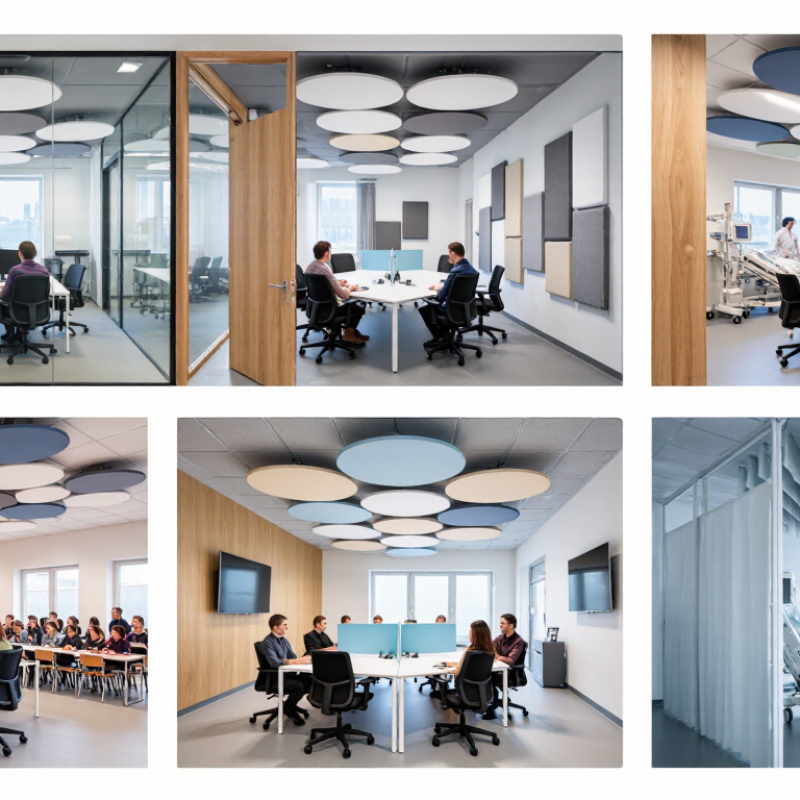
Why Are Acoustic Products Essential for Global Buyers?

What Are Acoustic Products and How Do They Work?

Acoustic products are materials and structures designed to control unwanted sound. They include wall panels, ceiling baffles, acoustic screens, doors, and room dividers. Each product solves a different problem. Some absorb sound, while others block, scatter, or isolate it.

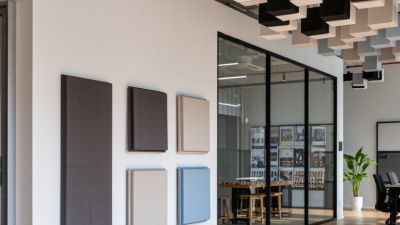
Absorbing products usually contain porous cores, such as mineral fiber or recycled textile. Sound enters the surface and loses energy through friction inside the fibers. A panel near a meeting table can reduce reflected speech and improve conversation clarity.

Ceiling baffles work similarly, especially in rooms with hard floors and exposed ceilings. Blocking products use dense layers and sealed joints. They help stop sound moving between rooms. Diffusers spread reflections in different directions, reducing harsh echoes without making a room unnaturally quiet.

In office projects, I have found that placement matters as much as thickness. A high-performing panel can achieve little when installed behind furniture or far from the main reflection path. Room size, surface materials, occupancy, and ventilation noise also affect results.

Products should be assessed through technical data and, ideally, on-site measurements. Laboratory performance does not always match a busy workplace.

This is easy to overlook. Buyers should also check fire performance, moisture resistance, installation requirements, and local building rules.

Acoustic comfort is not created by adding more products; it depends on choosing the right mechanism for the actual sound problem.

Why Do Global Buyers Need Acoustic Products?

Global buyers need acoustic products because uncontrolled sound affects health, concentration, and building performance.

The need is measurable. The World Health Organization’s Environmental Noise Guidelines for the European Region report that environmental noise causes more than one million healthy life-years lost annually in Western Europe.

The European Environment Agency’s Environmental Noise in Europe 2020 report also estimated that at least 113 million people faced road-traffic noise above 55 dB Lden.

These figures are regional, not universal, but they show the scale of the problem.

Acoustic panels, ceiling systems, door seals, and floor treatments help control reflected and transmitted sound. In a meeting room, excessive reverberation can blur speech and force people to repeat questions. In a hotel, weak partition performance may turn a quiet room into an uncomfortable one. ISO 3382 provides recognized methods for measuring reverberation time and room-acoustic performance, giving buyers a technical basis for comparison.

Products should be selected after checking room size, surface materials, frequency range, installation conditions, and local building requirements.

Still, acoustic treatment is not a magic wall.

A high-performing panel cannot correct poor ventilation noise or an improperly sealed door. Buyers sometimes focus on absorption ratings alone, which is an understandable but incomplete choice. Project experience suggests that installation details often decide the final result.

Reliable suppliers should provide test methods, fire-performance documents, maintenance guidance, and realistic performance limits. Better decisions come from measured site conditions, not attractive claims.

Which Industries Benefit Most from Acoustic Solutions?

Acoustic solutions matter wherever people need to hear, speak, focus, or recover. Offices use ceiling baffles, wall panels, and screens to control voices and equipment noise. In open-plan rooms, measured reverberation and speech clarity guide layout decisions. A quieter meeting room can reduce repeated questions and improve remote-call accuracy. However, sound control is not simply “making a room quiet.” It means managing reflection, transmission, and background noise. Small changes can produce noticeable comfort.

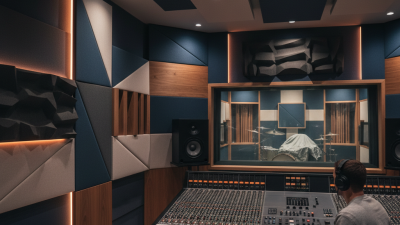
Schools benefit from clearer speech during lessons, especially in rooms with hard floors and high ceilings. Hospitals need calmer corridors, waiting areas, and patient rooms because noise can affect rest and communication. Hotels and restaurants use acoustic treatments to improve conversations without creating a lifeless atmosphere. Manufacturing facilities may require enclosures, barriers, or absorbent surfaces near loud machinery. Studios, cinemas, and broadcast rooms demand tighter control, where minor echoes can damage recorded content.

Global buyers should request independent test data, installation guidance, and material information. Local fire, safety, and building requirements also need checking before purchase. A site assessment should measure room size, surface materials, occupancy, and noise sources. One project may need absorption, while another needs sound insulation. The first assessment can be wrong. Furniture, people, and open doors change results. Regular follow-up measurements provide stronger evidence than attractive product images. Practical decisions often begin with a conversation beside the actual noise source.

How Do Acoustic Products Improve Spaces and Operations?

Acoustic products improve spaces by controlling reverberation, speech, and unwanted background noise. In a busy office, this can mean hearing a colleague without leaning forward. It can also reduce repeated questions during meetings.

The World Health Organization’s 2018 Environmental Noise Guidelines report links excessive noise with sleep disturbance, stress, and cardiovascular risks. The report estimates that traffic noise causes over one million healthy life-years lost annually in Western Europe. These findings extend beyond roads. Poor indoor acoustics can exhaust workers through constant listening effort.

Better sound control supports clearer meetings, focused work, and safer communication. Wall panels, ceiling baffles, acoustic screens, and absorptive furnishings can reduce reflected sound. ISO 3382-2 provides methods for measuring reverberation time in ordinary rooms. Buyers should request measured performance, not rely on attractive product images.

Small changes matter.

A 2021 workplace study published in the Journal of Environmental Psychology found that speech privacy and noise remain major sources of office dissatisfaction. In practice, placing absorption near reflection points often works better than covering every wall. Open spaces still need balance. Too much absorption may create a dull room and weaken useful communication.

Product selection should consider fire performance, cleaning requirements, installation access, and the room’s actual occupancy. Noise mapping before installation can reveal overlooked sources, such as printers, ventilation, or hard flooring. Results may vary. That is why post-installation testing and user feedback remain essential for reliable purchasing decisions.

Why Are Acoustic Products Essential for Global Buyers?

How do acoustic products improve spaces and operations?

What the data means

The chart shows World Health Organization guideline values for indoor continuous sound levels. Acoustic products such as absorbers, partitions, ceiling systems, and insulated panels help spaces move toward these lower noise targets, supporting speech clarity, concentration, rest, comfort, and more efficient daily operations.

Source: World Health Organization, Guidelines for Community Noise, 1999. Values shown are recommended indoor LAeq limits in decibels.

What Factors Should Buyers Consider When Choosing Acoustic Products?

Choosing acoustic products is not simply a matter of picking the thickest panel. Buyers should begin with the room’s purpose, size, surfaces, and noise pattern. A meeting room needs speech clarity, while a studio may require controlled reflection across several frequencies. Measure the problem before ordering. Echo time, background noise, and wall coverage give more useful guidance than appearance alone. Ask for laboratory data, including absorption results by frequency, rather than relying on broad marketing claims. An attractive product can still perform poorly in the wrong frequency range.

Material safety deserves equal attention. Request fire-performance documents, VOC information, cleaning instructions, and installation guidance. For schools, hotels, and offices, products should withstand daily contact, dust, and occasional spills. Check whether the test method matches local building requirements. Independent test reports and clearly dated technical sheets improve confidence. Do not ignore the ceiling, floor, doors, and ventilation. Sound often escapes through gaps. Mounting hardware, panel spacing, and air gaps can change real-world performance.

Cost should include freight, labor, replacement parts, and future maintenance. Request samples and test one area before approving a large shipment. This small trial can expose color shifts, weak edges, or difficult installation. It is easy to focus on unit price and overlook labor. That mistake can be expensive. Reliable suppliers explain limitations, provide traceable documents, and answer technical questions directly. Still, no product fits every room. Recheck the design after installation, because occupied spaces rarely behave exactly like drawings.

Why Are Acoustic Products Essential for Global Buyers? — What Factors Should Buyers Consider When Choosing Acoustic Products?

Buyer Consideration Relevant Product or Metric Typical Data or Range Why It Matters Recommended Verification
Speech intelligibility Wall panels, ceiling absorbers, acoustic baffles Acoustic absorption is commonly reported by NRC, with many commercial products falling approximately between 0.50 and 1.00. Higher absorption can reduce reverberation and improve voice clarity in offices, classrooms, meeting rooms, and public interiors. Request laboratory test results according to ASTM C423 or ISO 354, including the test mounting method.
Noise transfer between rooms Acoustic doors, partitions, wall systems, glazing Sound transmission performance is usually expressed as STC or Rw; higher values indicate better laboratory isolation. Isolation products help limit conversations, equipment noise, and activity noise passing through walls, doors, and partitions. Check ASTM E90, ASTM E413, ISO 10140, or ISO 717 results and confirm that joints, seals, and installation details are included.
Reverberation control Ceiling tiles, suspended clouds, fabric-wrapped panels Reverberation time, measured in seconds, depends on room volume, surface finishes, furniture, and the total area of absorption. Shorter reverberation generally supports clearer speech and lower perceived noise, but the target should be selected for the room's function. Ask for a room-acoustic calculation or simulation rather than selecting products from absorption ratings alone.
Low-frequency performance Bass traps, thick absorbers, air-spaced wall panels Porous absorbers generally perform better at mid and high frequencies; greater thickness and an air gap can improve lower-frequency absorption. Low-frequency noise from HVAC systems, traffic, machinery, and music can remain noticeable even when high-frequency noise is controlled. Review octave-band or one-third-octave absorption coefficients instead of relying only on a single-number rating.
Fire safety Panels, ceiling systems, curtains, foams, and composite products Fire classifications vary by market. Common references include ASTM E84 Class A and EN 13501-1 classifications such as A1, A2, B, or C. Interior acoustic materials may be subject to strict requirements for flame spread, smoke production, and reaction to fire. Obtain a current certificate for the exact product, thickness, facing, adhesive, and installation configuration.
Durability and maintenance PET felt, mineral fiber, fiberglass, wood-based panels, washable finishes Expected service life depends on humidity, impact exposure, cleaning method, UV exposure, and installation environment. Durable and cleanable surfaces can reduce replacement frequency in transport facilities, schools, hospitality areas, and healthcare spaces. Request cleaning instructions, impact resistance data, humidity limitations, warranty terms, and spare-material availability.
Environmental and indoor-air requirements Low-emitting adhesives, recycled-content panels, mineral fiber and PET products VOC emissions are often evaluated using programs or standards such as CDPH Standard Method v1.2 or ISO 16000 test methods. Low-emitting materials can support healthier indoor environments and green-building documentation. Ask for VOC test reports, recycled-content declarations, environmental product declarations, and product safety data sheets.
Installation and integration Direct-mount panels, suspended systems, modular partitions, ceiling clouds Performance can change with panel spacing, orientation, air gaps, ceiling height, edge details, and the percentage of treated area. Correct installation is essential because laboratory results may not represent the final room if mounting conditions differ. Request layout drawings, fixing details, weight per square metre, suspension loads, and coordination requirements for lighting and HVAC.
International compliance Acoustic construction products and interior finish systems Requirements differ by destination, building type, and project specification; test methods are not always directly interchangeable. Compliance documentation can affect customs clearance, consultant approval, public-project eligibility, and liability. Confirm applicable local building codes, language requirements, certification validity, and whether reports are issued by an accredited laboratory.
Logistics and total cost Flat panels, compressed packaging, modular kits, custom-shaped products Total landed cost includes product price, packaging, freight volume, duties, installation labor, maintenance, and potential replacement costs. A lower purchase price may not provide the lowest project cost if the product is difficult to ship, install, repair, or replace. Compare quotations using the same area, thickness, performance ratings, packaging method, delivery terms, and installation scope.
Aesthetic and functional flexibility Printed fabric panels, colored PET felt, perforated wood, custom forms Available sizes, colors, patterns, perforation rates, edge profiles, and custom shapes differ by product system. Acoustic treatment can contribute to visual identity, zoning, privacy, wayfinding, and user comfort without occupying excessive floor space. Review physical samples, color tolerances, repeat-order consistency, replacement procedures, and the acoustic effect of decorative facings.

Note: Acoustic performance depends on the complete room design and installation. Product ratings should be compared only when the test method, mounting condition, frequency range, and product configuration are equivalent.