Top 10 Types of Noise Panels for Global Buyers?
For global buyers, choosing noise panels is rarely a simple decision about color, price, or shipping volume. A panel that performs well in a podcast studio may disappoint inside a busy restaurant. Room size, reverberation time, ceiling height, surface coverage, and installation method all influence acoustic results. Material choices also affect durability, indoor air quality, maintenance, and visual design across different climates.
This guide explores ten practical types, including PET felt panels, fabric-wrapped panels, wood slat systems, perforated wood panels, acoustic foam, fiberglass panels, mineral wool panels, ceiling clouds, suspended baffles, and movable acoustic screens. Each type serves different spaces and purchasing priorities. Some absorb mid-frequency speech effectively, while others help control reflections from ceilings or hard walls. Independent laboratory data matters. Buyers should check absorption ratings, fire-performance documentation, dimensions, mounting details, and warranty terms before approving an order. Standards can vary between markets, so familiar certification language should not replace verification.
No option is universally best. A lower-cost panel can become expensive when installation is difficult, replacement parts are unavailable, or coverage is underestimated. I have seen attractive solutions lose effectiveness because buyers treated decoration as acoustic treatment. That mistake deserves attention. Reliable sourcing also requires clear product samples, consistent specifications, moisture considerations, and realistic lead times. The following overview compares performance, appearance, installation, maintenance, and suitability, helping international purchasers make more defensible choices for offices, schools, hotels, studios, restaurants, and public interiors.
What Noise Panels Are and How They Control Sound
Noise panels are designed to manage sound inside a room, not to block every sound entering it. They absorb, scatter, or redirect sound energy. This reduces echoes, harsh reflections, and speech distortion. Sound still travels.
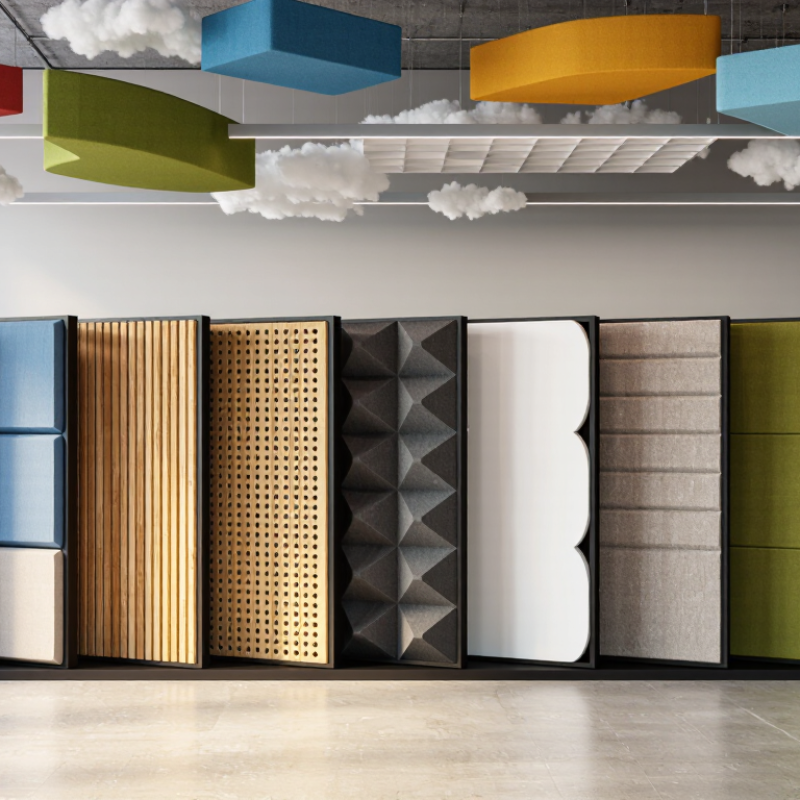
Common options include acoustic foam, fabric-wrapped fiberglass, mineral wool, PET felt, wood slat panels, perforated wood panels, micro-perforated panels, ceiling clouds, hanging baffles, and acoustic diffusers. Each type behaves differently. Fibrous panels usually absorb mid and high frequencies well. Thicker panels can address lower frequencies more effectively. Slatted and perforated surfaces often combine absorption with controlled reflection. Diffusers spread reflected sound instead of simply removing it.
In practical room testing, placement matters as much as the material.
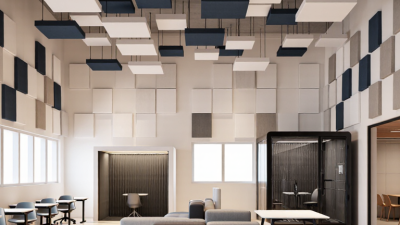
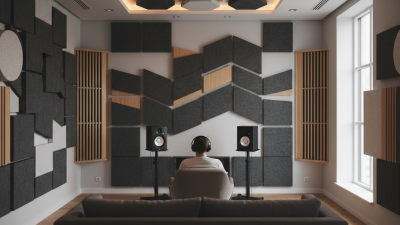
Wall panels near first-reflection points can make conversation clearer. Ceiling clouds help control sound above workstations or meeting tables. Baffles suit tall rooms because they add treatment without using much wall space. A bare corner may still create bass buildup. That distinction matters.
Performance claims should be checked against independent laboratory data, installation thickness, spacing, and coverage. A high absorption rating does not guarantee a quiet room. Furniture, glass, doors, and ventilation also affect the result. I have found that over-treating one wall can make a room feel unusually dull. Measure the space, treat the strongest reflections, then listen again. The best layout is sometimes less obvious than expected.
The Top 10 Types of Noise Panels by Material and Structure
Top 10 Types of Noise Panels for Global Buyers
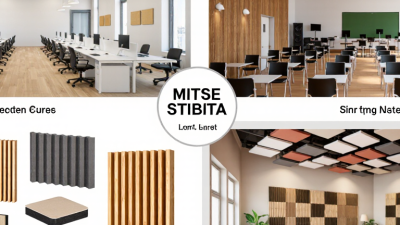
The best noise panel depends on material, structure, frequency range, and room use. Polyester fiber panels are lightweight and recyclable. PET felt panels offer similar flexibility with strong design potential. Fiberglass panels provide high absorption, especially for speech rooms. Mineral wool panels perform well across wider frequencies, but installers must protect exposed edges. Fabric-wrapped panels add a softer surface and suit offices, studios, and classrooms.
Wood slat panels combine solid timber, an air cavity, and an acoustic backing. Perforated wood panels improve absorption while preserving a natural appearance. Microperforated panels use tiny openings instead of porous fibers and can resist dust better. Perforated metal panels suit industrial interiors when paired with absorptive backing. Acoustic foam panels are effective for mid and high frequencies, but they often perform poorly at low frequencies. Suspended ceiling baffles form the tenth type, increasing exposed surface area above busy work zones.
According to the World Health Organization’s 2018 Environmental Noise Guidelines, average nighttime noise should remain below 40 dB Lnight outdoors to reduce health risks. That target shows why panel selection cannot rely on appearance alone. ISO 354 testing measures sound absorption in reverberation rooms, while laboratory values may differ from field performance. A dense panel can still absorb little sound. I would question any single NRC number. Check thickness, air gaps, edge details, humidity, fire classification, and installation quality. In practice, a 50-millimeter panel with a rear cavity may outperform a thinner decorative panel, especially when speech echoes across a hard meeting room.
Top 10 Types of Noise Panels for Global Buyers
Typical acoustic performance by material and structure
The chart compares representative Noise Reduction Coefficient (NRC) values for commonly specified noise-control panels. Higher NRC values generally indicate stronger absorption of mid-frequency airborne sound. Actual performance depends on thickness, air gap, mounting method, frequency range, and laboratory testing according to standards such as ASTM C423 or ISO 354.
How to Compare Noise Panels for Different Spaces and Applications
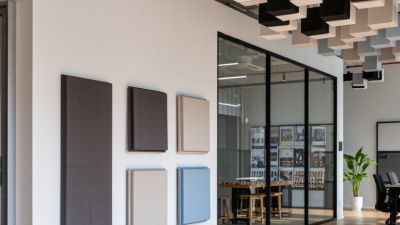
Noise panels are not interchangeable, even when their brochures show similar absorption ratings. For offices, fabric-wrapped wall panels can reduce speech reflections near desks. PET felt panels offer lighter handling and flexible shapes. Wood slat panels add warmth while controlling mid-frequency noise. Foam panels work in studios, but they may perform poorly against low-frequency rumble. Choose by the actual disturbance, not appearance.
Compare the room volume, surface materials, and noise path.
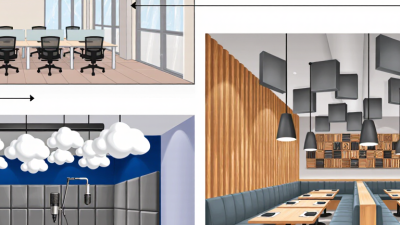
A ceiling baffle suits an open factory or call center with exposed ceilings. A suspended cloud can calm sound beneath concrete slabs. Movable acoustic screens help shared classrooms and temporary work areas. Perforated metal or fiberglass systems may suit workshops, where durability matters. Outdoor noise barriers require weather resistance and careful height planning. They are not substitutes for indoor absorption.
Check test data, fire classification, cleanability, and installation clearance.
NRC helps compare absorption, while STC relates more to airborne sound blocking. These ratings are useful, but incomplete. A panel with strong mid-frequency performance may not soften heavy machinery vibration. Moisture can also change a material’s service life.
In site assessments, I measure reverberation and listen at the noisiest seat. A small microphone test helps, too. I have seen attractive panels installed too high to help anyone. That mistake is easy to repeat. Compare maintenance access, edge protection, and replacement costs before choosing the final type.
How Global Buyers Can Choose Suppliers, Costs, and Custom Options
Top 10 Types of Noise Panels for Global Buyers
Global buyers can choose from polyester fiber, acoustic foam, fabric-wrapped, wood slat, perforated wood, PET, fiberglass, mineral wool, hanging baffles, and movable partitions. Each type suits a different space. Polyester and PET panels are lightweight and useful in offices, classrooms, and studios. Fiberglass and mineral wool often provide stronger absorption, but they require careful edge protection. Wood panels add visual warmth, although their acoustic performance depends on perforation and backing materials.
Supplier evaluation should begin with verified test data, not attractive photographs. Ask for sound absorption results, fire performance documents, density, dimensions, packaging details, and production tolerances. A reliable supplier should explain testing conditions clearly. Request samples before placing a large order. Small differences in color, thickness, or surface texture can become obvious across a large wall. Factory experience matters. So does communication.
Costs include more than the panel price. Freight volume, protective packaging, customs documents, installation hardware, and replacement pieces can change the final budget. Compare quotes using the same thickness, quantity, performance target, and delivery terms. Custom options may include printed surfaces, curved shapes, cutouts, moisture-resistant layers, and special mounting systems. These features increase tooling time and inspection needs. A lower quote can hide weaker backing materials. Even experienced buyers misjudge this. I would also confirm how the supplier handles damaged cartons and late design changes before approving production.